mne.bem.ConductorModel#
- class mne.bem.ConductorModel[source]#
BEM or sphere model.
See
make_bem_model()andmake_bem_solution()to create amne.bem.ConductorModel.- Attributes:
radiusSphere radius if an EEG sphere model.
Methods
__contains__(key, /)True if the dictionary has the specified key, else False.
__getitem__(key, /)Return self[key].
__iter__(/)Implement iter(self).
__len__(/)Return len(self).
clear(/)Remove all items from the dict.
copy()Return copy of ConductorModel instance.
fromkeys(iterable[, value])Create a new dictionary with keys from iterable and values set to value.
get(key[, default])Return the value for key if key is in the dictionary, else default.
items(/)Return a set-like object providing a view on the dict's items.
keys(/)Return a set-like object providing a view on the dict's keys.
pop(key[, default])If the key is not found, return the default if given; otherwise, raise a KeyError.
popitem(/)Remove and return a (key, value) pair as a 2-tuple.
setdefault(key[, default])Insert key with a value of default if key is not in the dictionary.
update([E, ]**F)If E is present and has a .keys() method, then does: for k in E.keys(): D[k] = E[k] If E is present and lacks a .keys() method, then does: for k, v in E: D[k] = v In either case, this is followed by: for k in F: D[k] = F[k]
values(/)Return an object providing a view on the dict's values.
- __contains__(key, /)#
True if the dictionary has the specified key, else False.
- __getitem__(key, /)#
Return self[key].
- __iter__(/)#
Implement iter(self).
- __len__(/)#
Return len(self).
- clear(/)#
Remove all items from the dict.
- copy()[source]#
Return copy of ConductorModel instance.
- Returns:
- beminstance of
ConductorModel The copied conductor model.
- beminstance of
- classmethod fromkeys(iterable, value=None, /)#
Create a new dictionary with keys from iterable and values set to value.
- get(key, default=None, /)#
Return the value for key if key is in the dictionary, else default.
- items(/)#
Return a set-like object providing a view on the dict’s items.
- keys(/)#
Return a set-like object providing a view on the dict’s keys.
- pop(key, default=<unrepresentable>, /)#
If the key is not found, return the default if given; otherwise, raise a KeyError.
- popitem(/)#
Remove and return a (key, value) pair as a 2-tuple.
Pairs are returned in LIFO (last-in, first-out) order. Raises KeyError if the dict is empty.
- property radius#
Sphere radius if an EEG sphere model.
- setdefault(key, default=None, /)#
Insert key with a value of default if key is not in the dictionary.
Return the value for key if key is in the dictionary, else default.
- update([E, ]**F) None. Update D from mapping/iterable E and F.#
If E is present and has a .keys() method, then does: for k in E.keys(): D[k] = E[k] If E is present and lacks a .keys() method, then does: for k, v in E: D[k] = v In either case, this is followed by: for k in F: D[k] = F[k]
- values(/)#
Return an object providing a view on the dict’s values.
Examples using mne.bem.ConductorModel#
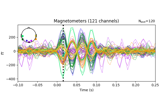
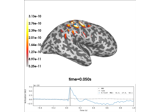
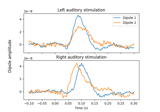
Computing source timecourses with an XFit-like multi-dipole model
Source localization by guided equivalent current dipole (ECD) fitting